Technical Due Diligence in Germany: 8 Questions to Answer Before You Buy an Industrial Site
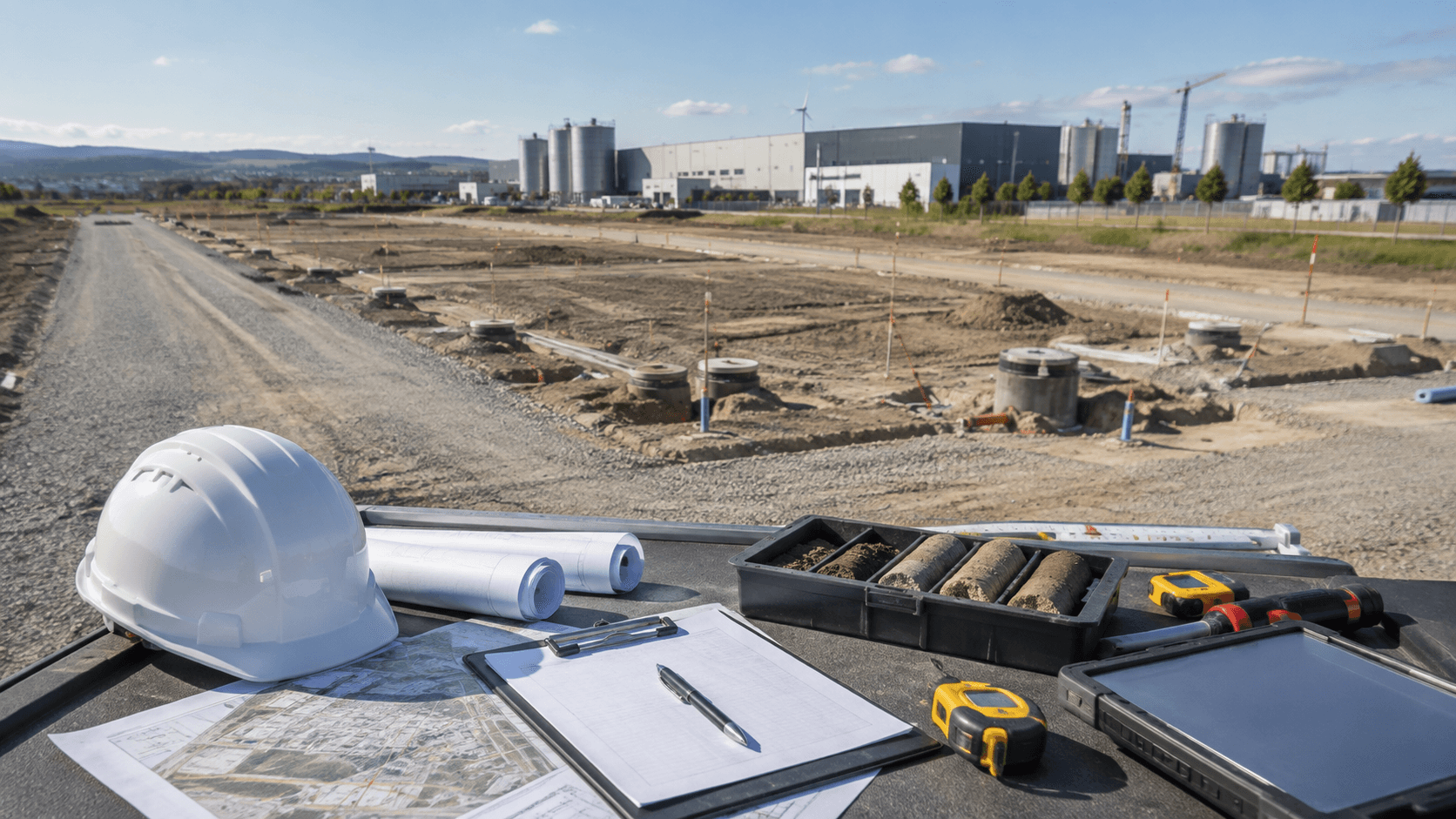
A low purchase price means little if the site later creates planning, utility, contamination or programme problems. Technical due diligence in Germany is the point where an attractive property has to prove that it can support the intended industrial project. The purpose is not to produce another long report — it is to answer one practical question before commitment: can this site support the business case at an acceptable level of risk?
Can the Site Physically Support the Project?
1. Confirm the planning position. Start with the intended use, not the existing building. Local planning conditions can affect land use, building dimensions, access and external areas. The review should confirm whether production, storage, office and operational areas fit the site’s known constraints.
2. Map the approval route. A building permit may be only one part of the process. Noise, emissions, fire strategy, fuel storage or other operational effects can require coordination with several authorities. The project needs a clear map of who is involved, what information is required and which design decisions cannot be postponed.
3. Investigate ground and contamination risk. Previous industrial use can leave contamination, buried structures, unsuitable fill or groundwater constraints. Historical records, a site inspection and proportionate testing help translate those risks into remediation, disposal, foundation and programme implications.
Can the Infrastructure Support Operations?
4. Verify utility capacity and connection dates. A line near the boundary does not prove that sufficient capacity is available. Electricity, gas, water, drainage, telecommunications and process-specific services should be checked against the actual operating requirement.
• Available and future capacity
• Connection point and responsible party
• Reinforcement or off-site works
• Realistic connection date
• Cost and approval dependencies
• Redundancy and expansion options
5. Test access, logistics and emergency movement. Review heavy-goods access, turning areas, delivery routes, parking, loading, emergency access and neighbouring traffic restrictions. Construction access matters too: limited crane positions, restricted delivery hours or shared access with live operations can change both programme and cost.
6. Understand existing buildings and hidden assets. Brownfield sites — land that has already been developed — can offer value, but they can also conceal structural problems, hazardous materials, underground services, unreliable drawings and adaptation costs. The assessment should separate what can be retained, what needs upgrading and what should be removed.
Does the Site Still Support the Business Case?
7. Protect operations and future expansion. The first phase should not block the second. Test whether the plot can accommodate future production lines, utility growth, additional storage, fire access and maintenance routes. Where operations will remain live, identify shutdowns and any temporary works — such as shoring, access platforms or temporary site facilities — before the site decision is made.
8. Convert findings into cost, programme and decisions. Due diligence only creates value when findings influence the investment decision.
• Immediate deal-breakers
• Conditions to resolve before purchase
• Budget allowances for known items and contingency for remaining uncertainty
• Programme risks and authority dependencies
• Responsibilities for the seller, investor and project team
• Actions required during pre-construction
A site can still be viable with known constraints. The real danger is buying it before those constraints have been priced, programmed and given an owner.
That is where technical due diligence earns its place. VisionArx uses it to turn site information into clear commercial choices, giving the investor the confidence to proceed, renegotiate or step away while those options are still open.
→ Explore VisionArx Pre-Construction & Technical Due Diligence